← Presentations · ARVANTTI LABS

Arvantti-Fractal® · Decision Engine

Arvantti-Fractal®: decision-making through variables, constraints, objectives, and risk, with three operating modes: alongside Arvantti-DigitalTwin®, as Physical AI, and as a risk calculation system.

13 slides · Business leaders and operations

In presentation mode: use arrows or click to advance, I outline, N notes, F fullscreen, Esc exit.

01 / 13 · Cover and index
Logo Arvantti Labs: Engineering Intelligent Futures

Arvantti-Fractal®

Decision making engine

A brand of

Sequoia Space Logo
Presenter notes

Arvantti-Fractal® is a registered trademark of Arvantti Labs, the intelligence solutions brand of Sequoia Space. Today I am going to show you what Arvantti-Fractal® is, how it makes decisions and the three ways in which it can operate in your company: connected to a digital twin, as intelligence applied to physical operations or as a risk calculation system to decide.

02 / 13 · Cover and index

Index

What we are going to travel

01

The challenge

Decide with many variables, restrictions and risk.

02

What is it and how do you decide?

A hybrid engine that explains its recommendations.

03

Three ways to operate

With digital twin, Physical AI and risk calculation.

04

Scenarios and government

Compare alternatives and stay in control.

05

How we start

From diagnosis to start-up, and contact.

Satellite mascot pointing

ARVANTTI LABS · A SEQUOIA SPACE BRAND

02

Presenter notes

This is the route. First the challenge: why deciding is difficult when there are many variables, restrictions and risk. Then what is Arvantti-Fractal® and how to decide. Then, the most important thing: the three ways it can operate. We close with how we compare scenarios, how you stay in control, and how we get started. Each index point has a link to its section.

03 / 13 · The challenge and what is Arvantti-Fractal®

The challenge

Decide with many variables, restrictions and risk

Variables

Demand, capacity, inventories, shifts, energy, times.

Restrictions

Equipment limits, standards, delivery windows, budget.

Objectives in tension

Cost, level of service, quality and security pull in different directions.

Uncertainty

Failures, demand changes and events that no one planned.

When all of this comes together, the decision depends on spreadsheets and the experience of a few people, and it is difficult to explain. because one option was chosen and not another.

Satellite mascot thinking

ARVANTTI LABS · A SEQUOIA SPACE BRAND

03

Presenter notes

Important decisions in an operation almost never depend on a single variable. There are many variables at time: demand, capacity, inventories, shifts, energy. There are restrictions: equipment limits, regulations, delivery windows or budget. The objectives are in tension: lowering costs can affect service or security. And there is uncertainty: failures and changes that no one planned. When everything comes together, the decision often remains in spreadsheets and the experience of a few people, and then it is difficult to explain why one option was chosen and not another. That is the problem that Arvantti-Fractal® addresses.

04 / 13 · The challenge and what is Arvantti-Fractal®

ARVANTTI-FRACTAL®

A hybrid decision-making engine

Artificial intelligence: analyzes information and explores alternatives.

Deterministic flows: Explicit rules, restrictions and validations apply.

Decision models: variables, objectives and written assumptions, not hidden.

It doesn't just tell you what to do: it explains because recommends it, with what assumptions and what risk it assumes.

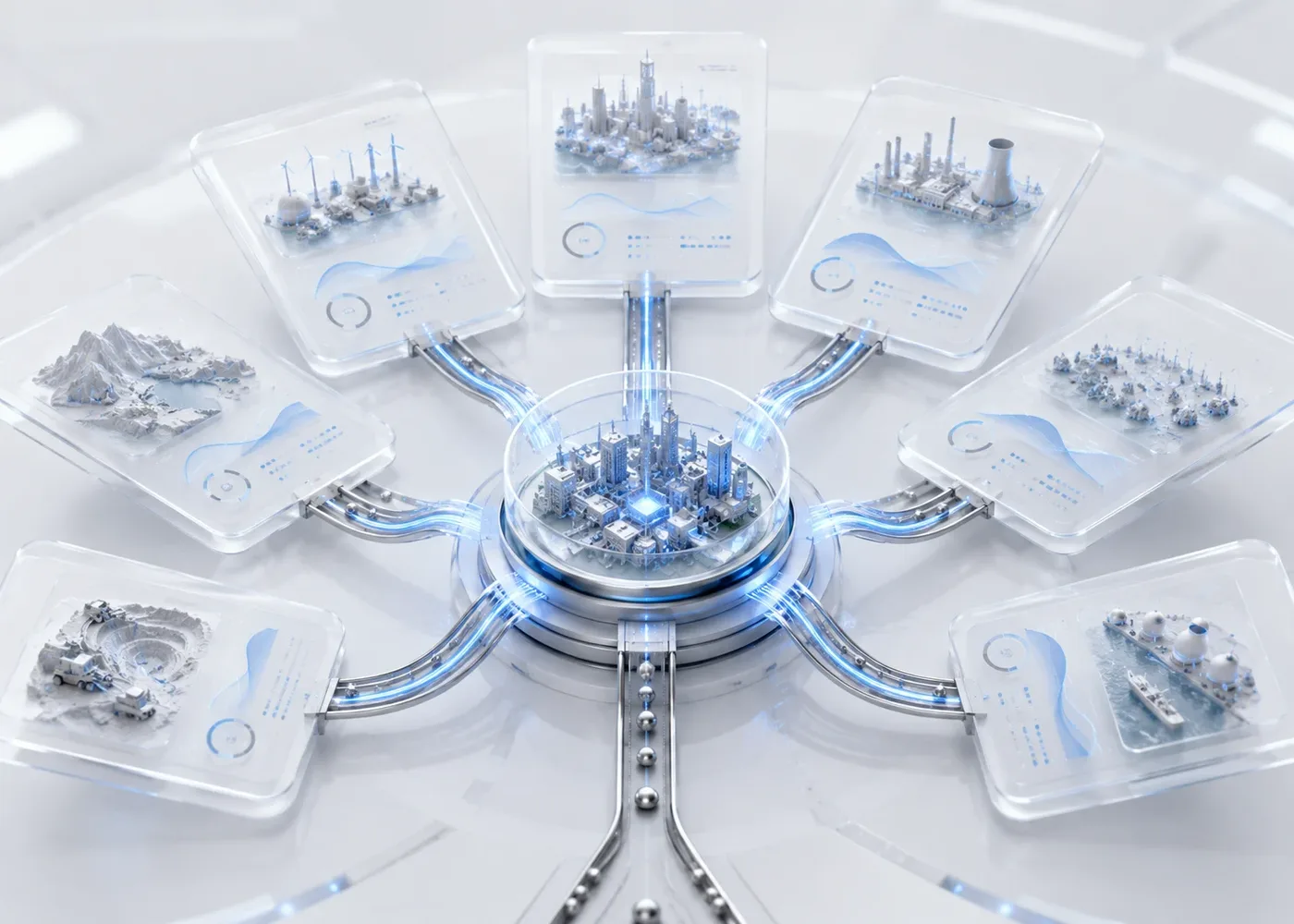
Illustration of Fractal engine connected to plant, logistics, analytics, control room and city

A decision core that connects to different domains: plant, logistics, processes and city.

ARVANTTI LABS · A SEQUOIA SPACE BRAND

04

Presenter notes

Arvantti-Fractal®, registered trademark, is the decision-making engine of Arvantti Labs. It is hybrid because it combines three things. Artificial intelligence helps analyze information and explore alternatives. Deterministic flows apply rules, constraints, and validations that can be reviewed line by line. And the decision models leave the variables, objectives and assumptions written. The result is not a black box: each recommendation comes with its explanation, the assumptions it used and the risk it assumes. The specific combination of these pieces is defined in each implementation.

05 / 13 · How you decide and your three ways of operating

How you decide

From data to an explained decision

01

Variables

What can be moved and what is measured: quantities, times, resources, costs.

02

Restrictions

What can never be violated: physical, security, regulatory or business limits.

03

Goals

What are you looking for and with what priority: cost, service, quality, energy, risk.

04

Scenarios

The current plan versus alternatives, under different assumptions.

05

Risk

How likely it is to violate a restriction and what impact it would have.

06

Recommendation

The suggested option, with its explanation and the assumptions it used.

07

Your team decides

A responsible person approves, adjusts or rejects. Always.

ARVANTTI LABS · A SEQUOIA SPACE BRAND

05

Presenter notes

That's how Arvantti-Fractal® decides, no matter which of its three forms it operates in. First define the variables: what can be moved and what is measured. Then the restrictions: what can never be violated, whether physical, security, regulatory or business limits. Then the objectives and their priority. With that, he creates scenarios: the current plan versus alternatives. The risk is calculated for each scenario: how likely it is to breach a restriction and what impact it would have. The result is an explained recommendation. And the last step is always human: a responsible person approves, adjusts or rejects.

06 / 13 · How you decide and your three ways of operating

Three ways to operate

One engine, three ways to use it

It is not just a complement to the digital twin: the twin is one of its sources, not a requirement.

01

With Arvantti-DigitalTwin®

Co-simulate your plant, analyze predictive events, compare alternatives and recommend.

It is supported by: the twin and the PLC signals.

02

Physical AI

Intelligence within the equipment: a chip with Arvantti-Fractal® calculates the best value of a parameter, on site.

It is supported by: the equipment sensors, within safe limits.

03

Risk calculation

Models variables, constraints and objectives, evaluates scenarios and risks, and explains the decision.

It is supported by: your business data.

ARVANTTI LABS · A SEQUOIA SPACE BRAND

06

Presenter notes

This is the central message. Arvantti-Fractal® is not just a complement to Arvantti-DigitalTwin®. It can operate in three ways. One: connected to Arvantti-DigitalTwin®, where it co-simulates the plant, analyzes predictive events, compares alternatives and recommends; the operator decides. Two: like Physical AI, that is, intelligence within the equipment itself: a chip with Arvantti-Fractal® reads the sensors and calculates on site the best value of a parameter, within the limits defined by your equipment. Three: as a risk calculation system to decide, based on your business data. In the next three slides we look at each one.

07 / 13 · How you decide and your three ways of operating

MODE 1 · WITH ARVANTTI-DIGITALTWIN®

Co-simulate your plant and anticipate events

Read without touching: receives PLC signals in read-only mode; He never writes about him.

Independent calculation: its own plant model, separate from the operation.

24 hour scenarios: the current plan (base) versus alternatives.

Recommends: The proposal reaches the operator, who accepts or rejects it.

Is your plant still a project? Arvantti-Emulator® It emulates it with a virtual PLC.

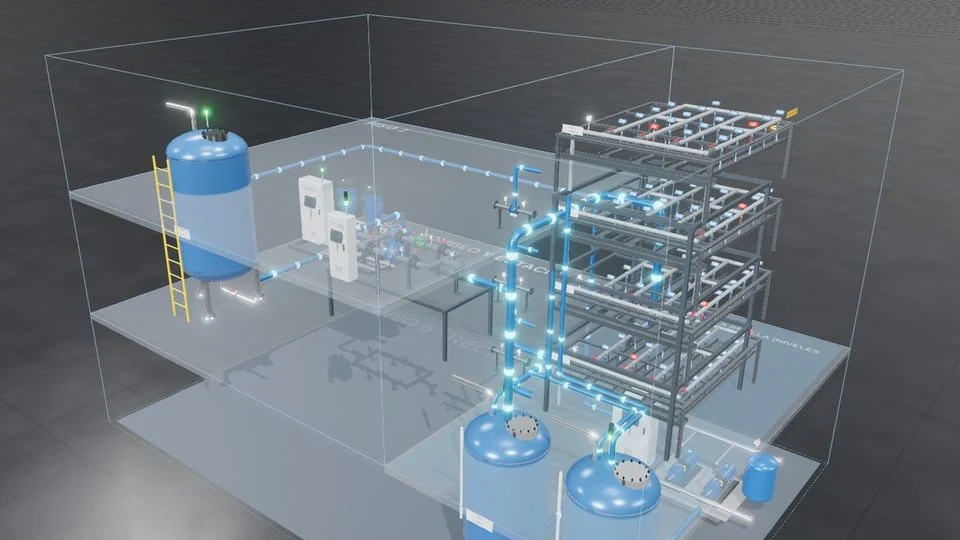
3D twin of the aqueduct to scale

Example, aqueduct to scale: base and alternative 24-hour studies for the operator to decide.

ARVANTTI LABS · A SEQUOIA SPACE BRAND

07

Presenter notes

First way: connected to Arvantti-DigitalTwin®, registered trademark. Arvantti-Fractal® reads PLC signals in read-only mode and never writes to the PLC or the plant. It runs its own calculation, independent of the model that represents the operation. It projects 24-hour scenarios, the current plan versus alternatives, and the recommendation reaches the operator, who accepts or rejects it. If your plant is still a project, Arvantti-Emulator®, a registered trademark, emulates it with a virtual PLC. Example: in the demonstration scale aqueduct, base and alternative 24-hour studies are generated that the operator reviews before deciding.

08 / 13 · How you decide and your three ways of operating

MODE 2 PHYSICAL AI

Intelligence within the team

TRADITIONAL CONTROL

Fixed rules: turns on, off or fixed a parameter.

Off

In range

On

WITH ARVANTTI-FRACTAL® ON THE CHIP

Read other parameters, resolve uncertainty and calculates the optimal value within the range.

That's Physical AI: intelligence lives within the team, on site, and always within the limits defined by your team.

TEAM IN PLANT

Sensors

read other parameters

Chip with Arvantti-Fractal®

probabilistic + deterministic

Actuator

apply the value

Optimal value

Off

On

Allowed range

ARVANTTI LABS · A SEQUOIA SPACE BRAND

08

Presenter notes

Second way: Physical AI. Here Arvantti-Fractal® is not loose on a server: it lives inside the hardware, on a chip mounted on the equipment itself, on site. Let's think about a device that controls a parameter: it can be off, operating within a range or on. With the usual, deterministic algorithms, you can tell it to turn on, turn off or set a value. What you can't ask him to do is decide, based on other parameters he's reading, what the best value is within that range. This already requires a probabilistic model with deterministic functions within the same chip, which is what Arvantti-Fractal® provides. In the diagram: the equipment's sensors read other parameters, the chip with Arvantti-Fractal® resolves the uncertainty and calculates the optimal value, and the actuator applies it, always within the allowed range defined by your equipment. Thus the system optimizes and makes the best decision on the site. Each implementation is defined by the customer's equipment, control system, and security standards.

09 / 13 · How you decide and your three ways of operating

MODE 3 · RISK CALCULATION

Calculate the risk and choose the best alternative

Flow Canvas

Illustrative example

ALTERNATIVE TO

Urgent order

extra shift

Line 1

Delivery day 3

Cost 108 · risk 18%

ALTERNATIVE B

Move orders

Lines 1 and 2

Delivery day 2

Cost 103 · risk 6% · best option

Optimization function

cost + risk lower is better

Base

TO

B better

Evaluated alternatives

Recommendation: alternative B. Lower cost and risk · assumption: demand +12%

Approve

Adjust

Decline

ARVANTTI LABS · A SEQUOIA SPACE BRAND

09

Presenter notes

Third way: a risk calculation system for making decisions. We start from the data you already have, such as ERP, spreadsheets or event logs, and we model variables, constraints and objectives. On the left, the flow canvas: when faced with an urgent order there are two paths. Alternative A puts an extra shift on line 1 and delivers on day 3; Alternative B moves orders between lines 1 and 2 and delivers on day 2. On the right, the optimization function: for each alternative the engine calculates cost plus risk, and the best one is the one lowest on the curve; in this example, B. Below, the recommendation explained, with its assumption, and your team approves, adjusts or rejects. The values ​​are illustrative. The same applies to logistics, process prioritization or selection of initiatives and budget; the result always depends on the data, assumptions and validation of your team.

10 / 13 · Scenarios, explainability and governance

Scenarios and comparison

Compare before deciding

Base scenario: the current plan, as it is.

Alternatives: changes that you define or that the engine explores.

Sensitivity: What happens if an assumption changes, such as demand, a failure, or a price.

Risk: how likely it is to violate a constraint and with what impact.

Your AI: connects with the AI ​​of your choice via CLI or MCP.

The criteria and their weights are defined with you. We do not present benchmark results as if they are guaranteed.

Illustration of a central core connected to various stages

Illustration: the same model, several scenarios side by side.

ARVANTTI LABS · A SEQUOIA SPACE BRAND

10

Presenter notes

In any of the three modes, the basis of the analysis is to compare before deciding. We start from the base scenario, which is the current plan. We compare it with alternatives, which you can define or that the engine explores. We do sensitivity analysis: what happens if an assumption such as demand, a failure or a price changes. And we calculate the risk of each scenario: how likely it is to violate a constraint and with what impact. Additionally, Arvantti-Fractal® connects with the AI ​​of your choice, via CLI or MCP, to explore alternatives and explain results. The criteria and their weights are defined with your team; We do not present baseline results as guaranteed, because any results depend on the data, assumptions, and validated model.

11 / 13 · Scenarios, explainability and governance

Explainability and governance

You know why he recommends, and you decide

Explicit assumptions

Variables, constraints and objectives are written and can be reviewed and changed.

Traceability

It is designed to record what data, what model and what decision was behind each recommendation.

Human in the loop

Analysis informs; a responsible person approves, adjusts or rejects.

Governing with Arvantti Harness®

You can operate on our governance foundation: permissions, validation and evidence. It is not a requirement.

ARVANTTI LABS · A SEQUOIA SPACE BRAND

11

Presenter notes

A recommendation is only useful if you trust it. That is why Arvantti-Fractal® works with explicit assumptions: variables, restrictions and objectives are written and your team can review and change them. It is designed to leave traceability: what data, what version of the model and what decision was behind each recommendation. The human is always in the loop: the analysis informs and a responsible person decides. And you can operate on Arvantti Harness®, trademark, our intelligence governance foundation, with permissions, validation and evidence. Note: Arvantti-Fractal® is an independent line and does not require Arvantti Harness® to work.

12 / 13 · How we get started and contact

How we start

From question to implementation

01

Diagnosis

We choose the decision, review your data and define the mode.

Result: a clear question.

02

Decision model

We write variables, constraints, objectives and assumptions with your team.

Result: rules that everyone understands.

03

Validation

We contrast it with historical cases or with the twin, and we adjust it.

Result: confidence in the model.

04

Start-up

Recommendations in a limited scope, with human approval and agreed success criteria.

Result: evidence to scale.

Satellite mascot pointing

ARVANTTI LABS · A SEQUOIA SPACE BRAND

12

Presenter notes

We start in four steps. One, diagnosis: we choose a specific decision, we review the data you have and we define in which of the three modes it operates. Two, decision model: we write with your team the variables, restrictions, objectives and assumptions. Three, validation: we compare the model with historical cases or with the digital twin, if there is one, and we adjust it. Four, start-up: the engine delivers recommendations in a limited scope, with human approval and success criteria agreed upon from the beginning. With that evidence we decide together whether to escalate.

13 / 13 · How we get started and contact

Let's talk

What decision do you want to make with more clarity?

Tell us your challenge and we will see together which of the three modes Arvantti-Fractal® fits into.

Andres Quiceno

Engineering CTO

[email protected]

Satellite mascot celebrating Arvantti Labs Logo

A brand of

Sequoia Space Logo
Presenter notes

We close with an open question: what decision do you want to make with more clarity. From your answer we see which of the three modes Arvantti-Fractal® fits into: connected to Arvantti-DigitalTwin®, as Physical AI or as a risk calculation system. My contact information is on the screen: Andrés Quiceno, CTO of Engineering, [email protected], and the sites arvantti.tech, arvantti.online and sequoia-space.com.